Shear strength is a crucial mechanical property that measures a material's ability to resist forces that cause its internal layers to slide past one another. When it comes to rock wool, understanding its shear strength is essential for various applications, including construction, insulation, and industrial uses. As a leading rock wool supplier, we are well - versed in the technical aspects of rock wool, and in this blog, we will delve into what the shear strength of rock wool is, the factors influencing it, and its significance in different applications.
What is Shear Strength?
Before we specifically discuss the shear strength of rock wool, let's first clarify what shear strength means. Shear strength is defined as the maximum shear stress that a material can withstand before it fails in shear. In simpler terms, when a force is applied parallel to the surface of a material, causing one part of the material to move relative to another part, the material's ability to resist this movement is its shear strength.
Shear Strength of Rock Wool
Rock wool is a fibrous material made from natural rocks, typically basalt or diabase, which are melted at high temperatures and then spun into fibers. The shear strength of rock wool depends on several factors:


Fiber Structure
The structure of the rock wool fibers plays a significant role in determining its shear strength. Well - oriented and interlocked fibers can provide better resistance to shear forces. During the manufacturing process, the spinning and laying of fibers can be controlled to achieve a more ordered and dense fiber structure, which enhances the shear strength of the final product. For example, if the fibers are randomly oriented, the shear strength may be lower compared to a product where the fibers are aligned in a more organized manner.
Density
Density is another critical factor affecting the shear strength of rock wool. Generally, higher - density rock wool has greater shear strength. As the density increases, the number of fibers per unit volume also increases, resulting in more fiber - to - fiber contact points. These contact points help distribute the shear forces across the material, making it more resistant to shear failure. However, increasing the density also has limitations, as it may affect other properties of the rock wool, such as its thermal insulation performance.
Binder Content
In some cases, binders are added to rock wool to improve its mechanical properties, including shear strength. Binders can hold the fibers together, creating a more cohesive structure. The type and amount of binder used can significantly impact the shear strength. A proper amount of high - quality binder can enhance the bonding between fibers, increasing the overall shear resistance of the rock wool. However, too much binder may make the material brittle and reduce its flexibility, while too little binder may not provide sufficient reinforcement.
Measuring the Shear Strength of Rock Wool
There are several methods to measure the shear strength of rock wool. One common approach is the direct shear test. In this test, a sample of rock wool is placed between two plates, and a shear force is applied parallel to the plane of the sample. The test measures the force required to cause shear failure and calculates the shear strength based on the cross - sectional area of the sample.
Another method is the torsional shear test, which is suitable for cylindrical or tubular rock wool samples. In this test, a torque is applied to the sample, causing it to twist. The shear strength can be determined from the measured torque and the dimensions of the sample.
Significance of Shear Strength in Different Applications
Construction
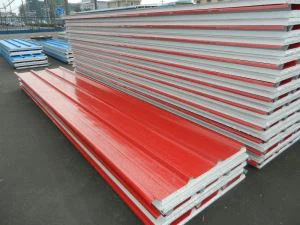
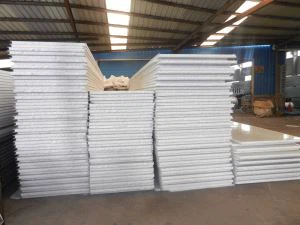
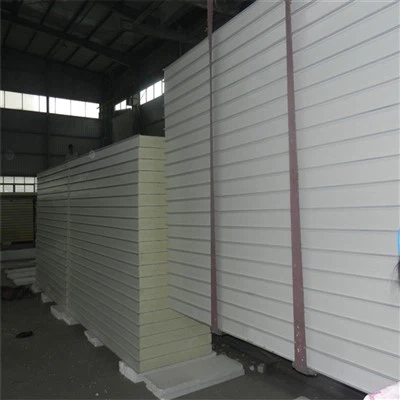
In construction, rock wool is often used as insulation material in walls, roofs, and floors. Adequate shear strength is necessary to ensure that the rock wool can withstand the forces exerted during installation and normal use. For example, during the installation of Fireproof and Soundproof Rock Wool Aluminum Sandwich Panel, the rock wool core needs to have sufficient shear strength to prevent it from being damaged or displaced when the panels are handled and fixed to the building structure.
Industrial Applications
In industrial settings, rock wool may be used for insulation in pipes, boilers, and other equipment. The shear strength of rock wool is important to ensure its long - term stability and performance. For instance, in a high - vibration environment, the rock wool insulation needs to resist the shear forces caused by vibrations to maintain its integrity and insulation effectiveness.
Automotive Industry
In the automotive industry, rock wool can be used for soundproofing and insulation purposes. The shear strength of rock wool in automotive applications is crucial to ensure that it can withstand the dynamic forces generated during vehicle operation, such as acceleration, braking, and turning.
Our Rock Wool Products and Shear Strength
As a rock wool supplier, we offer a wide range of rock wool products with different shear strengths to meet the diverse needs of our customers. Our manufacturing process is carefully controlled to ensure the optimal fiber structure, density, and binder content, resulting in rock wool products with excellent shear strength.
For example, our Fire Rated Colored Steel Rock Wool Sandwich Board with PU Sealing is designed with a high - strength rock wool core. The rock wool used in this product has been engineered to have a well - organized fiber structure and appropriate density, providing reliable shear strength to ensure the stability and durability of the sandwich board.
Our Thermal Insulated Composite Glass Wool PU Sealing Sandwich Panels also feature rock wool with good shear strength. This allows the panels to be easily installed and used in various construction projects without the risk of shear - related damage.
Contact Us for Rock Wool Procurement
If you are in need of high - quality rock wool products with excellent shear strength, we are here to assist you. Our team of experts can provide you with detailed information about our products, including their shear strength, density, and other technical specifications. We can also offer customized solutions based on your specific requirements. Whether you are working on a construction project, an industrial application, or an automotive design, our rock wool products can meet your needs. Contact us today to start a procurement discussion and find the best rock wool solution for your project.
References
- ASTM International. (Year). Standard test methods for shear strength of fiber - reinforced plastics. ASTM D7078.
- ISO. (Year). International standard for testing the mechanical properties of insulation materials. ISO 12612.
- Manufacturer's technical data sheets on rock wool products.