Hey there! As a steel floor supplier, I often get asked about the sound absorption of steel floors. It's a pretty important topic, especially in buildings where noise control is a big deal, like offices, apartments, and hospitals. So, I thought I'd take a few minutes to break it down for you.
First off, let's talk about what sound absorption actually means. Sound absorption is the process by which sound energy is converted into heat energy when it hits a material. The more sound energy a material can absorb, the better its sound absorption properties are. Materials with good sound absorption can help reduce noise levels in a room by preventing sound from bouncing off walls and other surfaces.
Now, when it comes to steel floors, they're not exactly known for their sound absorption capabilities. Steel is a very dense and rigid material, which means it tends to reflect sound rather than absorb it. When sound waves hit a steel floor, they bounce off it and continue to travel through the air, which can lead to a lot of noise and echo in a room.
But that doesn't mean steel floors are completely useless when it comes to sound control. There are a few things you can do to improve the sound absorption of a steel floor. One option is to add a sound-absorbing material on top of the steel floor. This could be something like carpet, rubber flooring, or acoustic underlayment. These materials are designed to absorb sound energy and reduce noise levels in a room.
Another option is to use a floating floor system. A floating floor is a type of floor that is not directly attached to the subfloor. Instead, it is supported by a layer of padding or insulation, which helps to isolate the floor from the subfloor and reduce the transmission of sound. Floating floors can be made from a variety of materials, including wood, laminate, and vinyl.


In addition to these options, there are also some design considerations that can help improve the sound absorption of a steel floor. For example, you can use a textured or perforated steel floor, which can help to break up sound waves and reduce echo. You can also use acoustic panels or baffles on the walls and ceiling of a room to help absorb sound energy.
So, as you can see, while steel floors may not be the best option for sound absorption on their own, there are a few things you can do to improve their performance. By adding a sound-absorbing material, using a floating floor system, and making some design changes, you can create a more comfortable and quiet environment in your building.
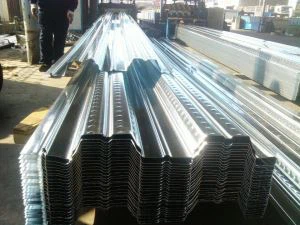
If you're interested in learning more about our steel floors and how we can help you improve the sound absorption of your building, please don't hesitate to [reach out for a quote]. We offer a wide range of Bondek Steel Deck Sheet, Construction Materials Composite Steel Decking, and Galvanized Steel Decking For Concrete that are designed to meet the needs of a variety of applications. Our team of experts can work with you to find the right solution for your project and help you achieve the best possible results.
References
- Beranek, Leo L. Noise and Vibration Control. McGraw-Hill, 1971.
- Kryter, Karl D. The Handbook of Hearing and the Effects of Noise: Physiology, Psychology, and Public Health. Academic Press, 1994.
- Fahy, Frank J. Sound and Structural Vibration: Radiation, Transmission and Response. Academic Press, 2001.